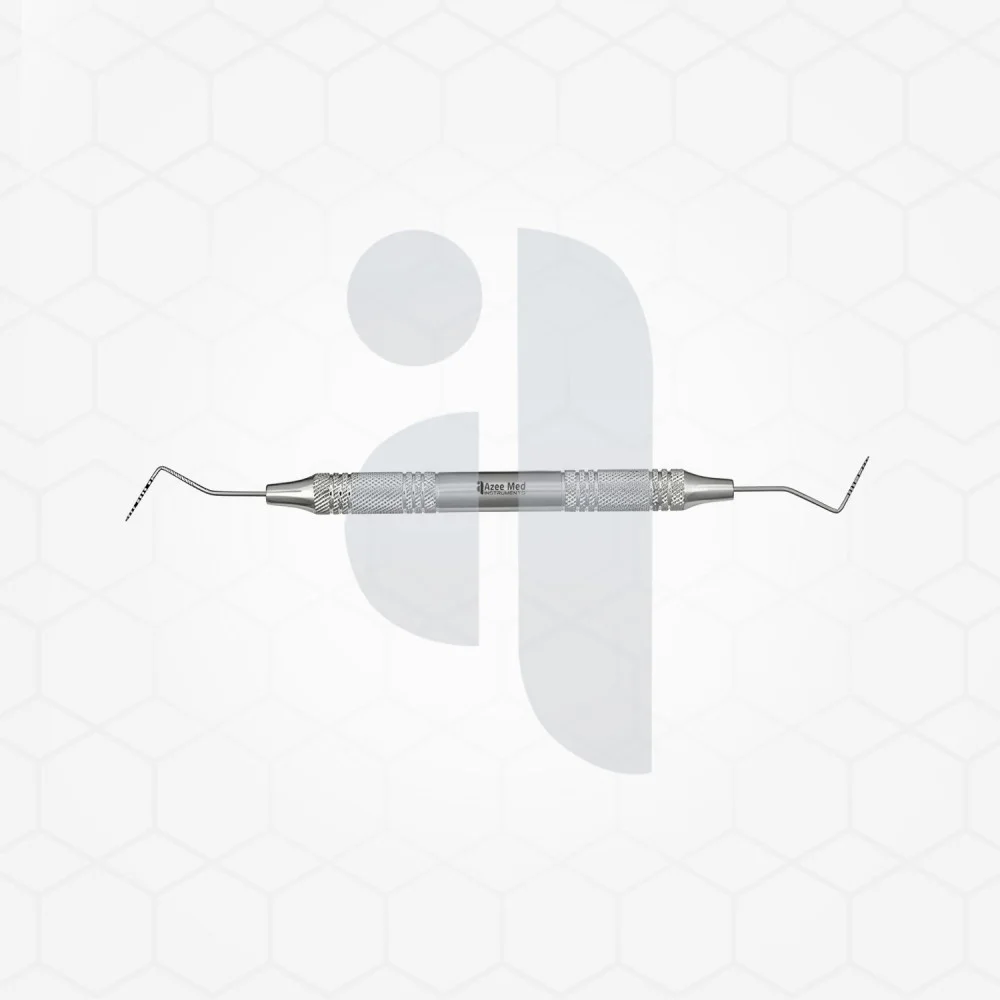
Accurate periodontal charting starts with the right instrument. When clinicians compare the UNC 15 probe vs Williams probe, they are deciding which tool gives them faster, clearer, and more reliable pocket depth readings. When you weigh the UNC 15 probe vs Williams probe, choosing a manufacturer with proven expertise means you can count on precise markings, ergonomic handling, and long-lasting performance.
Understanding the UNC 15 Probe
The UNC 15 probe was developed at the University of North Carolina. It has a 15 mm working end marked at every millimeter. Darker color-coded bands highlight the 5, 10, and 15 mm zones, so you can read measurements quickly. This detailed scale makes it a strong choice for measuring deep pockets, gingival recession, and clinical attachment levels in patients with advanced periodontal disease.
Key Differences in Design and Readability
The UNC 15 probe vs Williams probe comparison mainly comes down to range and precision. The UNC 15 offers a longer reach and millimeter-by-millimeter accuracy. The Williams probe trades some detail for a cleaner layout that many clinicians find easier to read. If you need exact numbers for complex cases, the UNC 15 has the edge. If speed and simplicity matter more, the Williams often feels more natural.
Clinical Applications
In everyday practice, the UNC 15 probe vs Williams probe choice often depends on your patients. General practices that see mostly healthy or mildly affected gums may prefer the Williams for quick screenings. Periodontal specialists who treat deep pockets and track disease progression usually rely on the UNC 15 for thorough documentation. Many clinics keep both on hand so they can match the probe to each case.
Comfort, Handling, and Durability
Whichever side of the UNC 15 probe vs Williams probe comparison you favor, build quality matters. A well-balanced handle reduces hand fatigue during full-mouth charting. Laser-etched markings stay legible through repeated sterilization. Premium stainless steel resists corrosion and keeps the tip thin and accurate, which protects patient comfort and the reliability of your readings.
Making the Right Choice for Your Practice
The best way to settle the cushing forceps question is to look at your workflow. Think about your typical caseload, how much detail your charting requires, and what your team prefers to use. Testing both instruments chairside often makes the answer clear. The UNC 15 probe vs Williams probe decision is less about which tool is better overall and more about which one fits your clinical goals.
Conclusion
Both instruments play a valuable role in periodontal care. The UNC 15 delivers detailed, extended measurements for complex cases, while the Williams offers quick, readable results for routine exams. By understanding the UNC 15 probe vs Williams probe differences and choosing well-made instruments from a trusted source like AzeeMed.
Comments